Why Independent Solar Installation Services Stand Out
Personalized attention and consultative approach
In a country where load shedding has become a fixture of daily life, the choice of solar provider carries real weight. Private solar installers offer something that volume driven corporations rarely can. They have a genuine stake in your outcome.
They take time to understand your household’s specific consumption patterns, roof orientation, and budget constraints. They ask questions before they quote. They walk your property, check your switchboard, and consider your future energy needs. A proper consultative approach typically covers:
- an energy usage audit
- system sizing based on actual data
- panel placement that maximizes yield
- financing options suited to local conditions
This level of scrutiny comes from being accountable to their reputation in the community. Private solar installers depend on word of mouth, which keeps the focus on long term performance rather than quick commission.
Deep local expertise for permits and weather patterns
South Africa’s solar landscape is shaped by municipal bylaws, grid connection rules, and regional weather quirks. A system that thrives in the Highveld may struggle in a coastal mist belt. Independent private solar installers live inside these conditions.
They know that Cape Town requires specific inverter certifications, while Johannesburg’s grid congestion affects approval timelines. They understand how summer thunderstorms impact panel orientation, and why corrosion resistance matters near the ocean. I have seen systems fail when installers overlooked these details.
Typical local knowledge covers:
- Municipal application procedures and grid connection requisites
- Hail risk mitigation through panel tilt and tempered glass specs
- Coastal corrosion protection through anodised frames and marine grade fasteners
This is not information found in a manual. It is accumulated from years of site visits. When you work with private solar installers, you hire that accumulated judgement, reducing the risk of expensive redesigns or failed inspections.
Flexible system sizing and equipment options
Off-the-shelf solar packages promise simplicity, but they ignore the peculiarities of your roof, your budget, and your daily consumption. Independent private solar installers do not stock a single solution. They build each system around your metering setup, your load profile, and your future plans, like adding a heat pump or an EV charger.
This flexibility extends to equipment. You might need bifacial panels for a reflective roof or a hybrid inverter that tolerates Eskom’s erratic voltage. Private installers source components from multiple suppliers, matching warranties to your site’s actual conditions. They will spec a smaller array now, then expand it later without rewiring the whole house.
Options are not infinite, but they are practical. The installer’s job is to balance cost, performance, and lead time. That means asking hard questions about your usage patterns before quoting.
Relationship-driven service and support
A local installer once told me, ‘We sell the system twice: once at signature, and again at every service call.’ That is the essence of relationship driven support. Private solar installers do not vanish after the inverter is bolted to the wall. They stay for firmware updates, dirty panel alerts, and tariff changes.
When my neighbor’s hybrid inverter flashed a grid fault, the private solar installers he used had a technician on site within 48 hours. He did not just reset it. He walked through the event log, adjusted the charge profile, and left an after hours number. That is the difference between a vendor and a partner.
- Direct access to the engineer who designed your system
- Proactive monitoring for voltage spikes
- Single contact for multiple warranties
In South Africa, with loadshedding shifting and bylaws changing, that continuity is a practical necessity.
How to Evaluate Potential Solar Contractors
Verifying licenses, certifications, and insurance
The sun does not ask for credentials. But the humans who harness it should have them. Before you sign a contract, look past the glossy quote and examine the professional standing behind it. Private solar installers in South Africa are required to register with NERSA, and their electrical work must be certified through a Certificate of Compliance. Ask to see the PV GreenCard for the lead installer; that document confirms hands-on competency, not just a completed course. Insurance deserves equal scrutiny. Request a public liability certificate and check that the policy covers the entire installation period, including everyone who steps onto your roof.
- Confirm the NERSA registration number matches the company name
- Review the PV GreenCard and its expiry date
- Verify the insurance policy’s coverage limits
When evaluating private solar installers, these three records are your guarantee. They do not add friction; they remove uncertainty.
Reviewing track record and customer testimonials
Solar projects outlive the salesperson who sold them. That is why the track record of private solar installers matters more than a glossy brochure. Customer testimonials are useful only when they reference specific outcomes. A delayed permit or a clean roof inspection beats generic praise.
Seek out installers who permit site visits to completed projects. Ask for client contacts from at least two years ago. System longevity reveals installation quality! These contractors vary widely.
- Verify the installer’s registration status with the local energy authority.
- Check the company’s operational years and completed installation count.
- Search for testimonials on independent review platforms.
A forged testimonial takes minutes to create. Sustained praise across multiple years is harder to fake.
Comparing equipment quality and warranties
Load shedding has taught South Africans to value durability, yet most solar quotes still hide the real story. The equipment quality and warranty terms separate reputable private solar installers from the rest. You need to compare more than the price per watt. Ask for the technical datasheet of each component. Look at the degradation rate and the operating temperature range.
Scrutinize warranty claims carefully:
- Which party pays for labor and shipping if a panel fails in year six?
- Does the installer guarantee the system’s performance or just the parts?
- What happens if the manufacturer exits the South African market?
Contractors with proven workmanship will answer these questions without flinching. Others will hand you a brochure and avoid eye contact. Trust the ones who show you the fine print.
Assessing project management and communication practices
When I evaluate a solar contractor, I watch how they handle questions about timelines. Private solar installers who hesitate on milestones often stall on delivery. Good project management means a clear schedule, named contacts, and a written communication plan.
Ask who updates you weekly, and how. A site manager who replies within hours beats a salesperson who disappears after signing.
A reliable installer will show you:
- A project timeline with inspection dates
- A single point of contact for queries
- A protocol for unexpected delays
But the real test is their response to a problem. When a part arrives late, do they call you first or hide it? That behavior reveals everything about their process!
Requesting detailed quotes and transparent pricing
Requesting detailed quotes from private solar installers exposes how each business prices risk. Some contractors send a single line item with a total. That approach hides assumptions about cabling, roof work, and utility approval. You need a written breakdown to compare offers fairly.
Transparent pricing itemises every component and names the payment schedule. Ask directly about Eskom application fees, scaffolding, and inverter placement. These costs appear only when a contractor has thought them through.
- Panel and inverter model numbers listed individually
- Labour separated from materials
- Payment milestones with delivery dates
Compare the scope, not the total. A detailed quote means the installer tracked every expense. That discipline carries into the installation itself.
Pricing and Financing Options for Residential Solar
Upfront purchase versus solar loans and leases
The cost of solar power has dropped by half in the last decade. Financing still trips up most homeowners. In South Africa, a typical 5kW system runs around R150,000. Paying it all upfront is the simplest route. You own the panels outright and harvest every kilowatt of savings. Yet many families prefer a solar loan. Fixed monthly payments, often lower than the electricity bill they replace, make the switch feel less painful.
Leases and power purchase agreements are rare among reputable private solar installers. These setups transfer the equipment risk but complicate property sales and often carry escalator clauses. Ask your installer how they structure deals. Some offer in-house payment plans or partner with local banks. The key is comparing the total cost over years, not just the quoted installation price.
Leveraging federal and state tax incentives
The sun gives twice in South Africa: once as energy, once as tax relief. Section 12B and the rooftop solar tax credit reduce the net price of a 5kW system by a meaningful margin. Private solar installers who stay current with these provisions fold the savings into their quotes, lowering your initial capital outlay.
Ask about the solar tax credit during your first consultation. Some installers even handle the paperwork. That clarity transforms a large expense into a manageable investment, especially when combined with a loan structure.
Projected long-term savings and payback period
The payback period for a residential array in South Africa now sits between three and five years. A 5kW system, after all rebates, still lands near R95,000. Monthly savings on Eskom tariffs often exceed R1,900. That arithmetic turns a large expense into a cash-generating asset.
Financing widens the door for most households. Banks issue dedicated solar loans at prime plus 1%, and some private solar installers structure in-house payment plans with zero deposit. The monthly repayment frequently lands below your projected electricity bill, so cash flow stays positive from day one. Private solar installers who bundle financing into the quote make the comparison simple.
- Payback shortens when you replace geyser heating with a heat pump.
- Battery storage adds R40,000 but delays grid reliance.
Over twenty years, saved tariffs compound past R450,000. The long-term saving dwarfs the upfront sticker, leaving the financing structure as the only real variable.
The Step-by-Step Solar Installation Experience
Initial site evaluation and shading analysis
In South Africa, one tree limb can reduce a system’s annual yield by twenty percent. The first visit from private solar installers is not a sales call. It is a precise inspection. Private solar installers walk the perimeter, noting roof pitch, orientation, and future obstructions. Shading analysis with a solar pathfinder maps shadows for every day of the year. A north facing roof with a spectacular view may hide a significant flaw.
The assessment includes measuring roof planes, checking for hot spots, and recording the distance to tall structures.
- Roof angle and structural load capacity
- Obstacles like chimneys and vents
- Seasonal shading from trees or buildings
- Inverter placement for ventilation
This data creates a precise model. You receive a report with monthly generation estimates. This is the quiet moment where expectations become grounded. The math tells you the truth.
Custom system design and energy production projections
Once the shading report lands in your inbox, the crew shifts from detective to architect. They model the array using your actual consumption data, not a national average. Energy production projections get correlated to your geyser, your oven, and your tendency to run the dryer in winter. The design phase happens on a laptop, but the real work happens on your roof.
- Racking installation and waterproofing check
- Panel mounting and torque verification
- DC wiring and inverter commissioning
- Municipal inspection and meter swap
Every step follows a sequence that private solar installers have refined over dozens of rooftops. The tension arrives at the inverter. That first flicker of generation feels like a small triumph. Your meter starts spinning backwards, and the entire suburb can hear your kettle rejoicing.
Permitting, paperwork, and utility approvals
Before a single panel catches the sun, the paperwork begins its slow crawl through municipal corridors. Your private solar installers submit engineering drawings, compliance certificates, and the small-scale embedded generation application. This is a liturgy of stamps and signatures, requiring patience.
The utility approval often proceeds at a glacial pace. Johannesburg, Cape Town, and Durban each maintain their own timeline.
- Verify the meter number matches the application
- Submit the single-line diagram and inverter specifications
- Await the letter of approval before grid connection
Only then does installation commence. A missed signature delays inverter commissioning. An incorrect tariff code holds up the municipal inspection. Private solar installers sequence each step to prevent rework.
Professional installation and electrical work
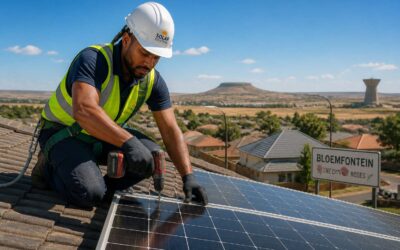
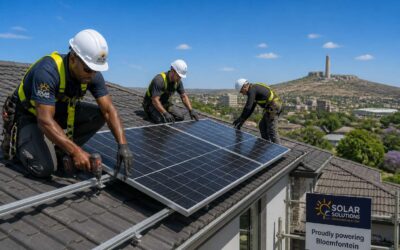
Once the approvals land, the real work begins. Private solar installers arrive early with a crew, the exact panel count, and a plan that was already approved on paper. The roof is measured again, the mounting rails are laid out, and the inverter position is confirmed with you before any drilling starts.
Professional installation follows a strict sequence. The racking goes up first, then panels are clipped into place. The DC wiring runs to the inverter, and the AC side connects to your distribution board. Each connection is torqued, labelled, and tested before the next step.
- Roof anchoring and waterproofing checks
- DC string wiring and polarity verification
- Inverter configuration and grid settings
- Earth leakage and surge protection testing
The electrical work must comply with South African standards. Private solar installers check phase balance, earthing, and the utility meter reading before flipping the switch. Commissioning is the final step, done with you watching the production numbers climb.
Inspection, interconnection, and system activation
The municipal inspector arrives unannounced. They scrutinise what the paperwork promised against what the roof delivers. Racking torque, module earthing, DC cable segregation, and inverter clearance all get measured against the approved COC requirements. I have seen inspections fail over a missing cable tie.
- PV array earthing and surge protection continuity
- DC isolator accessibility and labelling
- Inverter AC isolation and grid connection point
These checks determine whether the municipality issues the grid connection approval. Private solar installers prepare by self-inspecting days earlier, correcting deviations before the official visit.
Interconnection follows approval. The municipality swaps the old meter for a bidirectional unit, measuring import and export. This step depends on municipal scheduling. Private solar installers track the application status and update you on delays.
System activation happens once the meter is sealed. The inverter synchronises with the grid’s voltage and frequency, then exports surplus. You see the first production reading on the meter, a quiet confirmation that the system now operates as part of the grid.
Performance monitoring and maintenance handoff
Once the meter ticks forward, performance monitoring takes over. Your inverter compiles data, but the app does the thinking. Private solar installers set thresholds for voltage, temperature, and yield. A sudden deviation triggers an alert, saving you from silent degradation.
- Daily production graphs
- Fault code explanations
- Battery state of charge, if applicable
The maintenance handoff demands attention. The installer should walk you through panel washing intervals, inverter fan checks, and connection torque inspections. Leave that session with a written checklist and a direct contact number.
Avoiding Costly Missteps When Hiring a Solar Company
Not shopping around for multiple quotes
Many South African homeowners accept the first quotation they receive, assuming solar pricing is standardised. It is not. Private solar installers set their own margins, source different equipment, and calculate labour differently. The difference between the lowest and highest quote for the same system can exceed 30 percent.
When you skip the comparison process, you lose leverage and visibility. You cannot know whether a proposed system is competitively priced or padded with unnecessary costs. Consider what typically varies between quotes:
- Inverter and panel brands with different price tiers
- Labour rates based on roof type and installation complexity
- Warranty terms that affect long-term ownership costs
Without multiple quotes, you make decisions without a reference point. A single quote can seem reasonable in isolation, yet the absence of comparison hides inefficiencies. Homeowners who engage several private solar installers gain a clearer picture of fair pricing and system value.
Overlooking important clauses in the installation contract
Overlooking important clauses in the installation contract is a costly mistake. Many private solar installers include terms that shift risk onto the homeowner. You need to understand what you are signing before any work begins. Check payment schedules tied to milestones. Confirm who owns the system if you are using a loan. Review warranty obligations carefully.
Look for these red flags:
- Binding arbitration clauses that limit your right to sue
- Lien waivers that release the installer before final inspection
- Vague termination penalties that penalise you for delays
The installers who welcome your questions are the ones you can trust. If they hesitate, that says a lot. A contract is not paperwork. It is the foundation of your solar investment.
Disregarding extended warranties and after-sales service
Few homeowners think about the decade after the inverter hums to life. That is where the true cost of a solar system reveals itself. Private solar installers compete on upfront price, but the real difference emerges when a panel underperforms or a charge controller fails.
Extended warranties are a buffer against South African conditions, from hail in Gauteng to coastal salt corrosion in the Western Cape. Always ask who responds when the monitoring app goes dark for three days. After-sales service means a technician who answers, not a call centre.
The cheapest bid disappears when the sun sets. Private solar installers who stand behind their work will show you their maintenance schedule without hesitating. That commitment costs more on paper, but it protects your yield for decades.
Choosing solely on price without assessing long-term value
The lowest quote in Johannesburg often arrives with hidden trade-offs. A system built from mismatched components might pass the initial inspection, yet fail under Highveld UV exposure. Choosing solely on price without assessing long-term value is the most expensive decision a homeowner can make. Private solar installers who bid low often source panels from grey market channels, which complicates warranty claims later.
Consider a string inverter that underperforms for months before failing entirely. The replacement cost can erase the initial savings. Some homeowners find their installer has vanished, leaving orphaned equipment and no technical support. Private solar installers with established local footprints carry risk differently, because their reputation remains tied to every installation.
A prudent buyer should weigh the following:
- The number of years the company has operated under the same ownership
- Whether the proposed equipment list includes local distributor backups
- If the quoted price covers performance guarantees or only hardware

0 Comments